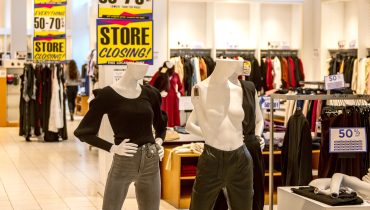
More than a decade ago, Gerry Harvey confidently declared that Harvey Norman was best placed to be “the last man standing” in Australian retail. At the time, this sounded bold. Today, it sounds less like bravado and more like an accidental prophecy.
Because while retail hasn’t died, the middle of retail most certainly has – slowly suffocated by poor service, bloated supply chains, and an unwavering belief that customers would continue to tolerate mediocrity simply because “that’s how it’s always been.”
AI, it turns out, was the final nail.
From Browsing to Bypassing
Back in 2012, shoppers were “driven online” by bad in-store experiences. In 2026, they don’t even bother going in-store in the first place.
Why would they?
Today’s consumers walk around with AI-powered personal assistants in their pockets. Before stepping foot into a store – or more commonly, before opening a browser – they already know:
- Which product is better
- Where it’s made
- What’s in it
- Whether it aligns with their values
- Who sells it direct
- And why the department store markup exists at all
Retailers once feared “showrooming.” What they failed to anticipate was “bypass-ing” – where consumers skip the store entirely and go straight to the source.
Department Stores: Now a Museum of Brands
David Jones and Myer once curated experiences. Today, many department stores resemble brand zoos – rows of fenced-off enclosures where sales staff can only speak about the logo stitched above their heads.
The modern consumer, aided by AI, finds this baffling.
Why wander through a trade-show-style maze when:
- AI can compare ten brands instantly
- Reviews are summarised, not sifted
- Fit, quality, and sustainability are scored
- And the product can be delivered tomorrow – direct from the maker?
In an AI-powered world, “I only work for this brand” is not a feature – it’s a warning label.
In an AI powered world, products designed for “churn” (only to last a short time before being replaced) is not “fashion”, it’s a sign of poor quality and even poorer value.
AI Has Changed the Power Balance
Retail once controlled:
- Information
- Shelf space
- Customer access
AI demolished all three.
Consumers now arrive armed with:
- Ingredient analysis
- Supply-chain transparency
- Ethical sourcing scores
- Price-to-value comparisons
- Alternative recommendations from D2C competitors
This means the traditional retail advantage – scale – has been replaced by a new advantage: trust + relevance + transparency.
And this is where D2C brands thrive.
Why D2C Wins in an AI World
AI doesn’t favour big brands.
It favours clear brands.
Direct-to-consumer businesses excel because they:
- Control their narrative
- Explain their value clearly
- Build direct relationships
- Adapt faster than legacy retailers
- Offer authenticity instead of assortments
When AI assistants recommend products, they prioritise:
- Fewer ingredients
- Known sourcing
- Consistent quality
- Honest pricing
- Verified customer outcomes
In short, AI doesn’t ask, “Who has the biggest store?”
It asks, “Who delivers the best outcome for this person?”
That question terrifies traditional retail.
The New Retail Irony
Ironically, many retailers still believe their biggest competition is Amazon.
It’s not.
Their real competition is:
- The manufacturer selling direct
- The niche brand with radical transparency
- The founder-led business telling a clear story
- The AI assistant quietly steering customers elsewhere
Retailers once sat between brands and buyers.
AI has politely but firmly removed the chair.
Experience Still Matters – Just Not the Old Kind
Retail leaders often respond by saying:
“People still want experiences.”
They’re right.
But they misunderstand the experience people want.
Today’s experience is:
- Confidence, not confusion
- Speed, not wandering
- Knowledge, not persuasion
- Alignment, not upselling
Standing in a store for 40 minutes waiting for someone to unlock a cabinet is no longer an experience – it’s a cautionary tale.
So… Will Gerry Be the Last Man Standing?
Possibly.
Because surviving retail today doesn’t require:
- The most stores
- The biggest footprint
- The loudest catalogues
It requires:
- Fewer assumptions
- More transparency
- Better data
- Direct relationships
- And a willingness to admit the old model is broken
If traditional retailers continue acting as expensive middlemen in an AI-powered world that hates friction, many will quietly disappear – TS Eliot was only half right. They’ll disappear not with a bang, but with a clearance sale.
The Future of Retail Is Smaller, Smarter, and Direct…or Maybe not Retail at All
The winners won’t be:
- The biggest
- The loudest
- Or the last clinging to the old model
They’ll be the brands that:
- Embrace AI as a guide, not a threat
- Treat customers like partners, not transactions
- Remove friction instead of adding polish
- Sell fewer things – better
- Sell better things – that best suit each customer’s individual needs
AI doesn’t kill retail.
It exposes it.
And in doing so, it rewards the brands brave enough to stand for something real – even if they don’t have a flagship store to prove it.
Final Thought
If Gerry Harvey does end up the last man standing, it won’t be because everyone else failed to sell products.
It will be because they failed to adapt to a world where:
- Customers are smarter
- AI is relentless
- And “because we’ve always done it this way” is no longer a strategy – it’s an obituary.